uk-listings
Poor atomization in an industrial oil burner occurs when liquid fuel does not break into the intended droplets or spray pattern before combustion. The root cause can be a fuel-supply problem, incorrect pressure or flow, a contaminated atomizer, unsuitable operating adjustment, or unfavorable combustion conditions.
The distinction matters because poor flame quality does not automatically mean the atomizer is defective. A burner can produce an appropriate spray yet still burn poorly if combustion air or furnace pressure is unsuitable. Effective troubleshooting therefore starts with the fuel-spray process and then works outward to the rest of the burner system.
How Fuel Conditions Can Disrupt Atomization
Fuel condition is the first variable worth checking because the atomizer is designed around particular liquid-fuel properties. Changes in viscosity can alter how readily fuel separates into droplets, while contamination can restrict small passages or interfere with the atomizing surface.
A restricted filter or fuel line can also reduce the amount of fuel reaching the burner. Even if the atomizer itself remains clean, inadequate or unstable fuel delivery can prevent consistent spray formation.
Fuel quality should therefore be evaluated together with the burner manufacturer’s specified fuel requirements. Randomly changing fuel settings to compensate for an unsuitable fuel condition can mask the underlying problem rather than correct it.
How Pressure and Flow Affect the Fuel Spray
Mechanical atomization relies on fuel being delivered under the pressure required by the burner design. Pressure that is too low can reduce the energy available to break the liquid into droplets, while abnormal pressure can alter fuel flow and spray characteristics.
Fuel flow must also correspond to the burner’s intended operating range. A mismatch between the required firing rate and the actual fuel delivery can produce combustion behavior that appears to be an atomization fault.
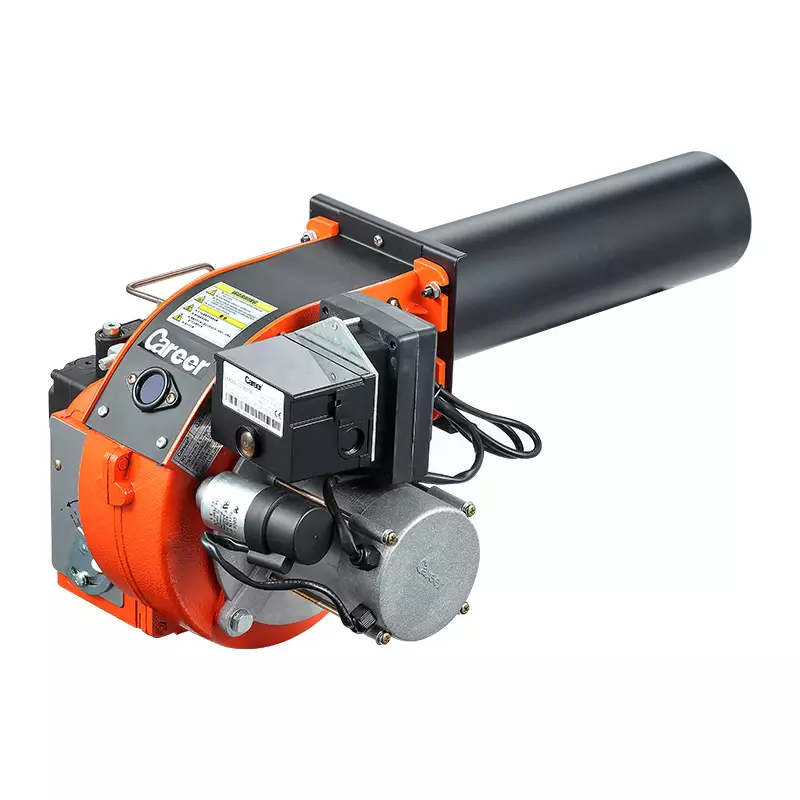
The CX14 provides a useful example of why operating range matters. Its published light-oil specifications list oil consumption of 7.5–14.5 kg/h, output power of 89–172 kW, and heat power of 76,500–147,900 kcal/h. The manufacturer notes that the actual fuel-consumption range depends on furnace pressure.
How a Damaged or Blocked Atomizer Causes Poor Spray Quality
The atomizer is where pressurized liquid becomes a spray, making its physical condition central to atomization quality. Deposits can obstruct flow passages, while wear or damage can change the way fuel exits the component.
An altered spray may have unsuitable distribution even if the total fuel flow appears normal. That difference is important: measuring fuel consumption alone does not prove that the spray pattern is correct.
Career Burner specifies high-pressure mechanical atomization for the CX14 and identifies easy atomizer maintenance without removal as one of its product features. This makes atomizer inspection a particularly relevant maintenance activity for that design.
Can Combustion Air and Furnace Pressure Cause the Problem?
Combustion air does not normally create the liquid droplets, but it strongly influences what happens to them afterward. Poor air distribution can make a correctly atomized fuel spray evaporate and mix inadequately, producing a flame that resembles an atomization problem.
Furnace pressure can also influence burner operation. The CX14 specification explicitly states that actual fuel-consumption range depends on furnace pressure, showing that burner performance cannot be considered separately from the equipment’s combustion environment.
For this reason, a diagnosis should compare fuel-side conditions with combustion-air and furnace conditions rather than adjusting the atomizer immediately.
A Practical Way to Find the Root Cause
A structured inspection can narrow the problem without unnecessarily replacing components.
First, verify the fuel. Confirm the specified fuel is being used and check for contamination, restrictions, or abnormal delivery conditions.
Second, check fuel pressure and flow. Measurements should be taken at appropriate points in the system and compared with the burner requirements.
Third, inspect the atomizer. Look for contamination, damage, or wear that could change the spray pattern.
Fourth, examine combustion air. Confirm that the air-supply system is providing the conditions required for stable combustion.
Finally, evaluate furnace pressure and firing rate. If the problem appears only under particular operating conditions, the cause may involve the interaction between burner output and the heating equipment.
What the CX14 Shows About Diagnosing Oil Burner Atomization
The CX14 is described by its manufacturer as a fully automatic monoblock diesel burner integrating fuel supply, automated control, air supply, ignition, flame monitoring, and operation management. Its listed features include high-pressure mechanical atomization, an integrated airflow regulator, manual fuel-flow regulation, and quiet operation.
Those specifications demonstrate why atomization should not be diagnosed as an isolated component issue. Fuel delivery, air regulation, ignition, and flame monitoring form part of the same operating system.
The product is listed for uses including food ovens, industrial boilers, hot-air generators, drying systems, and metal-processing furnaces. Its published data should be treated as the reference for the specific CX14 rather than generalized to every industrial oil burner.
When Poor Atomization Indicates a Burner-System Problem
Persistent spray problems after the fuel supply and atomizer have been checked may indicate a wider mismatch between burner operation and heating-equipment conditions. Furnace pressure, firing rate, combustion air, and fuel characteristics may need to be assessed together.
A quiet oil burner should likewise not be evaluated by operating sound alone. Quiet operation and correct atomization describe different aspects of burner performance, so an abnormal flame should not be attributed to noise or mechanical sound without examining the fuel-spray system.
The Career Burner CX14 demonstrates a key diagnostic principle: high-pressure mechanical atomization relies on fuel and furnace conditions that align with the burner design. Consequently, identifying poor atomization involves tracing the entire pathway from the fuel supply through the atomizer to the flame, rather than assuming every combustion issue stems from atomizer failure.