uk-listings

Product validation is rarely a single test. A new component may need to pass dimensional checks, fit with mating parts, withstand mechanical loads, survive temperature changes, and meet appearance expectations before the design is ready for production. Choosing the right prototype process for each test can make these evaluations more representative while reducing unnecessary development time and cost.
Metal and plastic rapid prototyping services give engineering teams several ways to produce functional parts before committing to production tooling. The key is not simply choosing the fastest process, but matching the manufacturing method and material to the validation objective.
Start With the Validation Requirement
Different tests require different levels of material and process similarity to the final product. A prototype intended only to confirm dimensions does not necessarily need the same manufacturing process as a part undergoing mechanical or thermal testing.
For dimensional validation, CNC machining is often a practical choice for both metal and plastic components. Machining can produce precise features, holes, interfaces, and reference surfaces directly from the CAD design. This makes it useful for checking critical dimensions before further development.
For plastic components, 3D printing can also help verify basic geometry at an early design stage. However, printed parts may not reproduce the dimensional behavior, surface finish, or material characteristics of an injection molded component. When these factors matter, machined prototypes or prototype tooling can provide more representative results.
Match the Process to Fit and Assembly Testing
Fit testing answers a simple but important question: does the part actually work with the components around it?
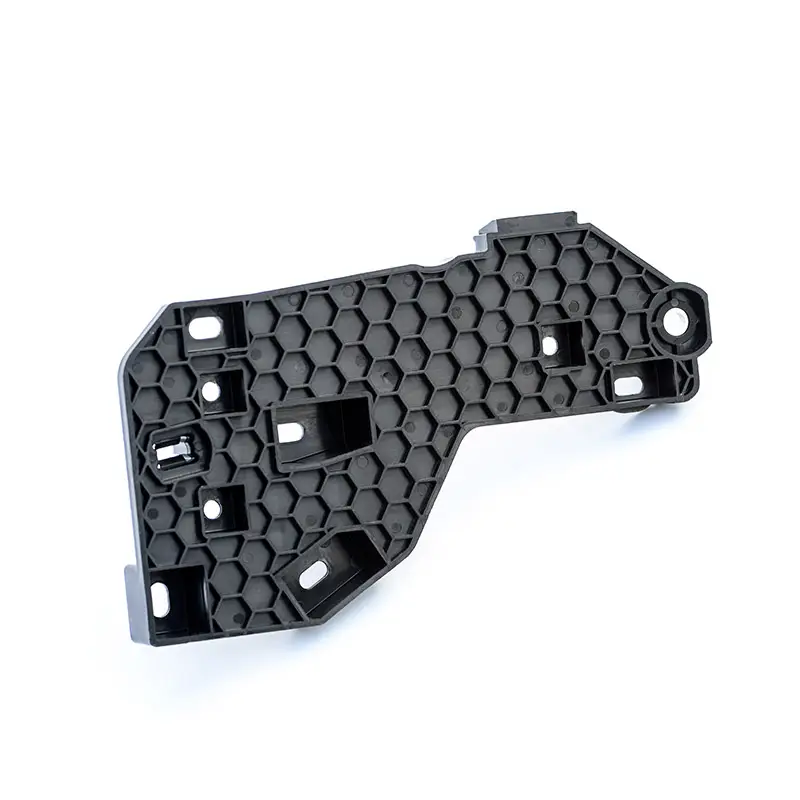
CNC machining works well for metal brackets, housings, mechanical interfaces, and other components where dimensional accuracy is critical. Plastic prototypes can also be machined from engineering plastics when designers need to evaluate clips, bosses, mounting points, or mating surfaces.
When an injection molded plastic part needs to be evaluated using production-grade material, prototype tooling becomes particularly useful. HordRT offers prototype molds using options such as aluminum tooling, soft steel tooling, and shared MUD mold inserts. These approaches allow teams to evaluate actual molded parts before investing in full-scale production tooling.
This distinction matters when assembly behavior depends on characteristics such as shrinkage, stiffness, wall thickness, draft, or molded surface quality.
Choose Functional Materials for Mechanical Testing
Mechanical testing requires more than a prototype that looks correct. The material and manufacturing process need to provide meaningful information about strength, stiffness, flexibility, durability, or load-bearing performance.
Metal CNC machining is suitable for functional prototypes requiring aluminum, steel, or other engineering metals. It can produce parts for load testing, structural evaluation, fixtures, brackets, and mechanical assemblies.
For plastic components, prototype tooling can provide a closer representation of the intended production part because the prototype is molded using production-grade thermoplastics. HordRT supports materials including ABS, PP, PC, PC/ABS, PA, POM, PBT, TPU, TPE, and glass-filled PA, depending on application requirements.
This allows material selection to become part of the validation process rather than an assumption made only from CAD geometry.
Consider Thermal Testing Early
Temperature can change how a component behaves. Expansion, contraction, softening, dimensional stability, and material degradation can all affect product performance.
For metal components, machined prototypes can be produced from the intended alloy when thermal behavior is closely related to the final application. For plastic components, selecting an appropriate engineering resin is equally important.
If thermal testing involves a molded plastic component, prototype tooling can be more representative than a purely visual prototype. HordRT’s prototype tooling process is designed to produce molded parts using engineering thermoplastics, allowing teams to evaluate characteristics such as temperature resistance and dimensional stability before full production tooling is finalized.
Appearance Review Requires More Than Geometry
Appearance validation covers surface texture, color, gloss, parting lines, visible defects, and overall product presentation. This is especially important for consumer products, electronics, appliances, and other products where the exterior influences purchasing decisions.
CNC machining can provide a useful route for metal appearance prototypes, particularly when the final component requires machined or finished metal surfaces. Plastic prototypes can be polished, textured, painted, or otherwise finished depending on the required review.
For molded plastic products, prototype tooling can provide an even closer visual reference because the part is created through an injection molding process. HordRT’s rapid prototyping capabilities combine CNC machining, injection molding, sheet metal fabrication, urethane casting, and other processes, giving projects more than one route from CAD data to physical validation.
Why Process Selection Matters to Development Efficiency
The value of rapid prototyping is not simply receiving parts quickly. The right process helps generate useful test results before expensive decisions become difficult to reverse.
HordRT integrates engineering review, DFM analysis, tooling, machining, molding, and quality inspection within its manufacturing workflow. Its rapid prototyping service includes preliminary DFM feedback covering factors such as parting lines, gate locations, wall thickness, tolerances, surface finishing, and potential molding issues.
HordRT also states that it provides detailed quotes within 24 hours, does not require a minimum order quantity, and supports rapid production schedules. Its facilities cover both plastic and tooling manufacturing and metal manufacturing, helping coordinate different prototype requirements through one manufacturing partner.
From Prototype Testing to Production Decisions
A successful validation strategy starts with the question, “What needs to be proven?”
If the priority is dimensional accuracy, CNC machining may provide the required precision. If the goal is basic form and geometry review, 3D printing can accelerate early iterations. If assembly or functional behavior depends on injection molding and production-grade thermoplastics, prototype tooling can provide more representative parts. For metal structures, machining and sheet metal fabrication can support different geometry and performance requirements.
The most effective approach is therefore not to use one process for every prototype. It is to select the process according to the test, material, geometry, quantity, and level of production similarity required.
With metal and plastic rapid prototyping services from HordRT, product teams can move from design review to physical validation through a range of manufacturing processes while receiving DFM input before production begins. This creates a practical path for identifying design issues earlier, refining the product with real parts, and moving toward production with greater confidence.