uk-listings

Building a competitive access equipment portfolio requires more than selecting machines with impressive reach. Dealers must balance customer demand, application requirements, operating environments, and investment costs to maintain a fleet that serves different industries without creating unnecessary inventory pressure. A telescopic boom lift can be a valuable option for customers who need elevated access across large outdoor work areas, particularly in construction, industrial maintenance, and infrastructure projects.
For dealers working with Zoomlion Access, matching models to customer requirements means understanding both the equipment’s technical capabilities and the practical conditions under which customers use it. A structured portfolio strategy can help dealers recommend suitable machines, explain their value, and build longer-term customer relationships.
Segment the Portfolio by Working Height and Application
A dealer portfolio should reflect the types of projects customers regularly undertake. Smaller contractors may prioritize access for general construction and building maintenance, while larger rental companies may need higher-reach machines for industrial facilities, infrastructure, and commercial developments. Reviewing local project pipelines and rental inquiries can help dealers identify which working-height categories deserve greater investment.
Zoomlion Access lists diesel models across several reach classes, including the ZT23J, ZT26J, and ZT32J. Their published maximum working heights are 25.1 m, 28.7 m, and 34.3 m, respectively. This range allows dealers to compare machines against customer requirements instead of treating one model as a universal solution.
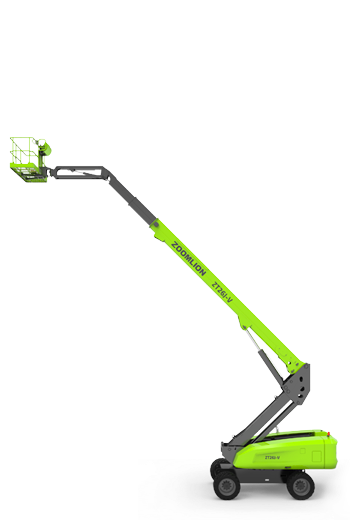
The ZT26J occupies a middle position in this selection. Its maximum working height is 28.7 m, with a maximum horizontal outreach of 22.1 m. Platform capacity is rated at 300 kg in unrestricted operation and 454 kg in restricted operation. Dealers should explain that these capacity ratings apply under different operating conditions, so customers must consult the load chart and operating manual before choosing a machine for a specific task.
Match Power Systems to Customer Work Environments
Power source is another important factor in portfolio planning. Diesel equipment can be suitable for large outdoor construction projects where long operating periods, site conditions, and mobility requirements influence purchasing decisions. Electric models may be more appropriate for customers working in environments where low noise or zero on-site exhaust emissions are priorities.
Dealers should therefore ask where machines will operate, how frequently they will be used, and whether customers need to move between multiple sites. These questions help distinguish genuine demand from interest driven mainly by purchase price or maximum reach.
For customers with recurring outdoor projects, the ZT26J combines diesel power with four-wheel drive and a published gradeability of 45% (24°). Those specifications can help dealers assess its relevance to demanding terrain, but they should not be presented as permission to operate on any slope. Site conditions, machine configuration, and manufacturer safety instructions remain decisive.
Evaluate Serviceability and Fleet Economics
Purchase decisions extend beyond machine performance. Dealers need to consider maintenance access, parts availability, technician training, warranty arrangements, and the time required to return equipment to service. These factors influence total ownership costs and can affect whether rental customers choose to work with a particular dealer again.
The ZT26J features a parallel four-link lifting mechanism designed for smooth boom movement, a hexagonal boom structure intended to provide rigidity and fatigue resistance, and a load-sensitive system designed to save energy. Its upgraded telematics support service efficiency, while the deadweight lowering system is designed to facilitate smooth, energy-efficient operation. Dealers can use these features to discuss operating and service considerations without promising specific savings that have not been verified.
When assessing telescopic boom lift suppliers, dealers should compare technical documentation, parts support, training resources, and after-sales service arrangements. A competitive quotation matters, but reliable support throughout the equipment’s service life can be equally important to fleet profitability.
Turn Customer Insights Into Purchasing Decisions
Dealers can strengthen inventory planning by tracking quotation requests, rental utilization, customer industries, and reasons for lost sales. If requests repeatedly exceed the reach of existing machines, a higher-capacity category may warrant consideration. If customers frequently ask for smaller equipment, expanding the entry-level range could be a better use of capital.
Before ordering from telescopic boom lift suppliers, buyers should also evaluate delivery lead times, regional demand, financing terms, and the supplier’s ability to support the expected fleet size. Pilot orders and periodic utilization reviews can help dealers limit inventory risk while testing demand for new models.
For a dealer considering the ZT26J, the decision should rest on whether local customers need its 28.7 m working height, 22.1 m horizontal outreach, diesel power, and dual platform-capacity ratings. Matching those specifications to documented customer requirements is more useful than stocking a machine simply because it fills a gap on a product list.
Build a Portfolio Around Real Demand
A successful access equipment portfolio balances reach, power source, serviceability, and investment risk. Dealers should segment customers by application, compare specifications carefully, and use actual sales and utilization data to guide inventory decisions.
Zoomlion Access‘s ZT26J offers one option for customers undertaking demanding outdoor work, while other models serve different reach requirements. By evaluating equipment against real jobsite needs and choosing telescopic boom lift suppliers with suitable technical and after-sales support, dealers can build a more relevant portfolio, manage capital responsibly, and develop stronger long-term customer relationships.