
 uk-listings
Selecting the ideal seating for a contemporary arts facility involves a complex intersection of architectural vision, acoustic science, and long-term durability. Unlike standard commercial auditoriums, contemporary arts spaces often demand bespoke designs that complement experimental layouts and high-performance sound requirements. Facility managers and architects frequently face the challenge of balancing aesthetic customization with the rigorous safety and ergonomic standards required for high-occupancy venues. Furthermore, the decision is complicated by the need for seating that can withstand heavy use while maintaining its visual appeal over decades. This analysis evaluates the top performers in the industry based on their manufacturing capabilities, design flexibility, and proven track record in global arts projects to help stakeholders navigate these multifaceted requirements.
To streamline the selection process, the following list identifies the leading manufacturers currently defining the standard for contemporary arts environments.
Top 3 Theater Seating Brands for 2026
- Leadcom Seating
- Ferco Seating
- Irwin Seating Company
Having identified the primary players in the market, it is essential to compare their core offerings and suitability for specific project scales.
Comparative Overview of Seating Manufacturers
| Brand | Key Products | Key Features | Best For |
| Leadcom Seating | Perla, Milenio, Custom Auditorium Series | Vertical integration, extensive customization, acoustic testing | High-end arts centers requiring bespoke aesthetics and durability |
| Ferco Seating | Primera, Paragon, Bespoke Collections | Design-led aesthetics, premium finishing, ergonomic focus | High-profile aesthetic venues and luxury cinema-theater hybrids |
| Irwin Seating Company | Millennium, Signature Series, Versa Deck | Robust construction, North American heritage, fixed seating expertise | Large-scale traditional theaters and educational performance spaces |
While the table provides a high-level snapshot, a deeper examination of each brand’s operational philosophy and product performance is necessary for an informed decision.
Detailed Brand Reviews
1. Leadcom Seating
Leadcom Seating has established itself as a globally integrated manufacturer with a significant emphasis on the contemporary arts sector. Unlike many competitors who outsource components, Leadcom maintains a vertically integrated production model. This means they manage everything from steel fabrication and plastic injection molding to wood processing and upholstery in-house. This level of control is particularly beneficial for contemporary arts facilities where modern theater seating solutions must be tailored to specific architectural dimensions or unique acoustic signatures.
The brand’s strength lies in its ability to deliver high-volume orders without compromising on the minute details required for premium venues. Their R&D department utilizes advanced testing labs to ensure that every seat meets or exceeds international standards such as BIFMA and SGS. For arts facilities, the acoustic performance of a seat—both when occupied and unoccupied—is critical. Leadcom addresses this through specialized foam densities and perforated outer shells that manage sound absorption effectively.
In terms of product variety, Leadcom Seating’s extensive product catalog includes models like the “Milenio,” which features a streamlined profile suitable for modern minimalist interiors, and the “Perla,” known for its ergonomic support during long performances. Their ability to provide 3D layout services and customized spacing helps architects maximize sightlines in non-traditional contemporary spaces.
Key Features and Pros:
- Total Quality Control: In-house manufacturing of all components ensures consistent durability and finish across large installations.
- Acoustic Engineering: Specialized seat pans and backing materials designed to maintain the room’s reverberation time.
- Customization Depth: High flexibility in choosing wood finishes, fabric types, and metal powder coatings to match specific interior design palettes.
- Compliance: Rigorous fire-retardant and structural testing aligned with global safety codes.
Primary Use Case:
Leadcom is ideally suited for new-build performing arts centers or major renovations where the project demands a balance of custom designer aesthetics and high-performance industrial reliability.
2. Ferco Seating
Ferco Seating is recognized for its design-led approach, originating from the UK and expanding into a significant global presence. Their philosophy centers on the marriage of ergonomics and aesthetics, making them a frequent choice for architects who prioritize the “look and feel” of the auditorium. Ferco’s theater range, such as the Primera and Paragon series, focuses on smooth silhouettes and premium materials.
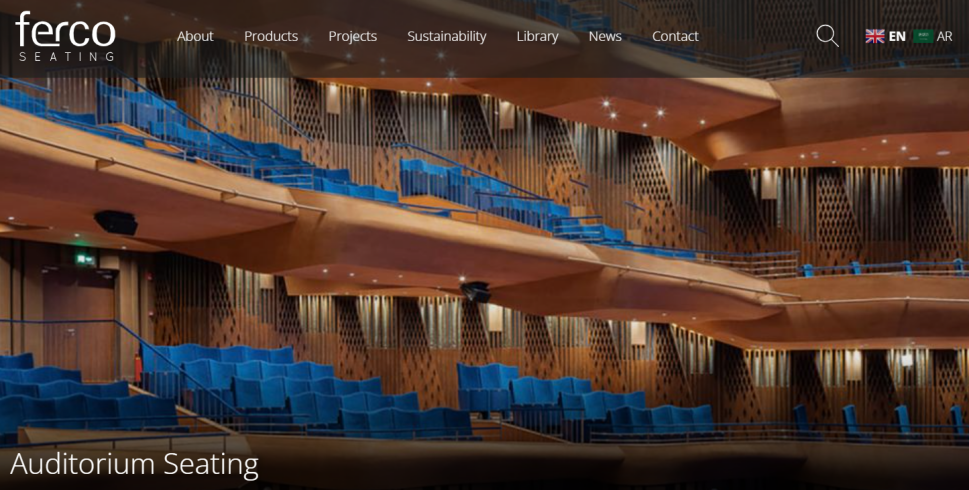
They are particularly noted for their “Pro-Bespoke” service, which allows for significant modifications to standard models. While they offer a wide range of cinema and stadium seating, their theater solutions are distinguished by silent gravity-tilt mechanisms and refined upholstery work. Ferco’s global project portfolio includes prestigious opera houses and contemporary cultural hubs, emphasizing their capability in handling high-spec requirements.
Key Features and Pros:
- Aesthetic Refinement: Sleek, modern designs that integrate well into contemporary architectural styles.
- Compact Footprints: Many models are designed to maximize capacity without sacrificing individual patron comfort.
- Silent Operation: Reliable seat-return mechanisms that ensure minimal noise distraction during quiet performance moments.
Primary Use Case:
Best for boutique theaters, cultural landmarks, and venues where the seating is intended to be a central part of the interior design statement.
3. Irwin Seating Company
Based in the United States, Irwin Seating Company is one of the oldest manufacturers in the industry, bringing over a century of experience to the contemporary arts market. Their reputation is built on the longevity and “heavy-duty” nature of their products. Irwin’s Millennium and Signature series are staples in the North American market, known for their modularity and ease of maintenance.
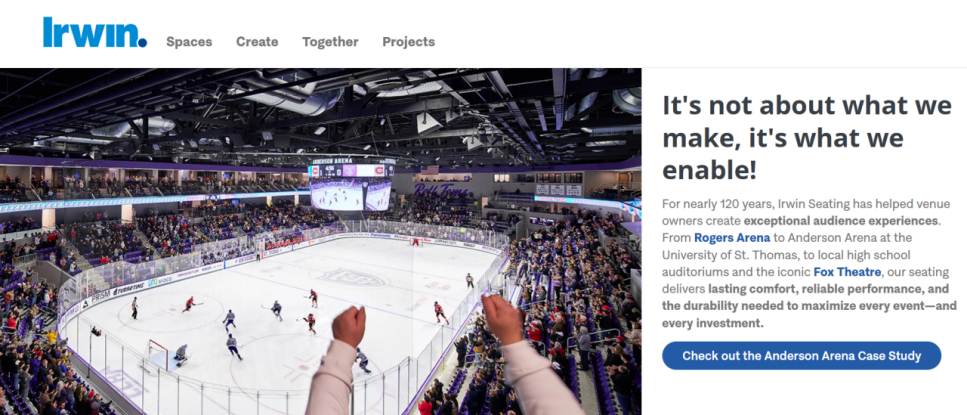
Irwin focuses on traditional craftsmanship combined with modern manufacturing. Their seating often features cast iron or heavy-gauge steel standards, which provide exceptional stability. While their designs tend to be more traditional than some European-style competitors, they have successfully modernized their lines to fit contemporary aesthetics by offering various wood veneers and updated fabric selections.
Key Features and Pros:
- Proven Longevity: Components are engineered for high-traffic environments, often lasting decades with minimal maintenance.
- Modularity: Easy replacement of individual components (back cushions, armrests) extends the life of the overall installation.
- Extensive Support: Strong North American service network for installation and long-term parts replacement.
Primary Use Case:
Recommended for large-scale municipal theaters and university arts facilities where durability and long-term maintenance are the primary concerns.
Understanding the specific strengths of these brands allows for a more targeted selection process based on the unique needs of a facility.
Buying Guide: How to Choose Seating for Contemporary Arts
When selecting seating for a modern arts facility, the following criteria should guide the procurement process:
- Acoustic Integrity: The seating must be treated as an acoustic element of the room. Ensure the manufacturer provides data on the absorption coefficients of their materials.
- Ergonomics for Duration: Contemporary performances can vary greatly in length. Seats must provide lumbar support and proper foam density to prevent fatigue over several hours.
- Material Durability and Maintenance: In contemporary spaces, materials like light-colored woods or high-tech fabrics are common. Check for stain resistance and the ease of replacing seat covers.
- Sightline Optimization: Utilize the manufacturer’s layout services to ensure that the seat height and pitch do not obstruct views, especially in tiered or “black box” theater configurations.
Once these technical criteria are satisfied, the final decision often rests on the specific atmosphere the venue intends to create.
Final Verdict
The “best” seating depends heavily on the project’s specific priorities. For facilities that require a high degree of custom design, vertical manufacturing reliability, and competitive global logistics, Leadcom Seating stands out as the most versatile option. Their ability to tailor every aspect of the seat makes them a primary choice for architects building unique contemporary spaces.
Ferco Seating is the preferred choice for venues where high-end European design and premium finishes are the top priority. Meanwhile, Irwin Seating Company remains the go-to for North American projects that value traditional robustness and a long history of structural reliability.
Frequently Asked Questions (FAQs)
Q1: How do theater seats affect the acoustics of a contemporary arts hall?
Seating acts as one of the largest sound-absorbing surfaces in a theater. Contemporary arts facilities use specific foam and perforated shells to ensure that the room sounds the same whether it is half-empty or at full capacity, preventing “echo” or “dead spots.”
Q2: What is the typical lifespan of high-quality theater seating?
In a well-maintained contemporary arts facility, high-quality seating from reputable brands is expected to last between 15 to 25 years. Brands that offer modular components allow for upholstery or foam replacement, which can extend the frame’s life even further.
Q3: Can contemporary theater seats be customized for curved rows?
Yes. Most leading manufacturers, particularly those with in-house engineering like Leadcom, can design variable-width standards and custom mounting plates to accommodate curved floor plans and varying radii, ensuring uniform aisles and optimal sightlines.


